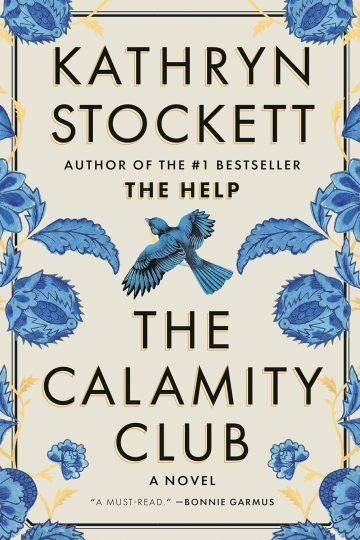
🎧 Reviewed by LD | Rating: 3.1/5 | Steam: 🔥 | Standalone
⚠️ This is a full spoiler review. If you haven’t read The Calamity Club yet — go read it first. We’ll be here when you’re done.
The Opening
Almost thirty hours. That is what this book asks of you. And before you hand over that kind of time, you deserve to know exactly what you’re getting into. Because The Calamity Club has a genuinely wonderful story inside it — a mother who loses her daughter to a corrupt system and builds an entire underground empire just to get her back. That premise is extraordinary. The execution is long. Very, very, very long. But if you’re going in, here is everything you need to know.
The Full Story — Spoilers Included
Oxford, Mississippi, 1933. The Great Depression is squeezing everyone, eugenics laws have legal teeth, and the story alternates between two women: eleven-year-old Meg Lefleur, locked inside the Lafayette County Orphan Asylum, and Birdie Calhoun, an unmarried bookkeeper who arrives in town hoping to borrow money from her sister.
Meg’s World
Meg has been at the orphanage for two years. She was told her mother abandoned her on Christmas Eve. The chairwoman, Garnett Pittman, runs the place like a penal colony wrapped in Christian charity and labels the older girls “unadoptable.” Meg is singled out for targeted psychological and physical abuse. What Meg doesn’t know — and what we slowly learn — is that this isn’t random cruelty. Garnett knows exactly who Meg is and exactly why she’s there.
Birdie Arrives
Birdie comes to Oxford expecting to find her sister Frances living comfortably on her banker husband’s wealth. Instead, she walks into a disaster. Rory Tartt has lost the family fortune, been fired, and flees town after looting the house of its silver. Frances eventually tracks him to a jail in Biloxi, where he was arrested at an underground party with other men for “unnatural acts.” Frances’s perfect life was always a facade. The marriage, the standing, the whole thing.
To earn her keep, Birdie takes a job auditing the orphanage’s ledger ahead of a state inspection. This is where she meets Meg. And this is where a protective bond forms that drives the rest of the story.
The Calamity Club
Then Charlie shows up. She comes to Birdie with a wild proposal: team up with a network of marginalized women, including sex workers and a Black woman passing as white, to take over the bankrupt Tartt mansion and run a covert operation. A speakeasy. A brothel. A hustle designed to siphon money from wealthy bootleggers, town elites, and the college crowd who think they own Oxford. They call it the Calamity Club.
Birdie is deeply religious and deeply uncomfortable with this. But she’s also watching Garnett abuse an eleven-year-old girl every day. The discomfort loses. She joins.
What Birdie doesn’t know yet is who Charlie actually is.
The Sham Adoption
Meanwhile, Meg gets adopted. Sort of. Tom Heidelberg, a local writer who has become a quiet surrogate father figure to Meg, and his wife Lucille take her in. But the whole thing is a scheme. Tom and Lucille are broke, and Tom’s controlling, wealthy mother Isabelle has cut off their trust fund allowance. Their plan: convince Isabelle they adopted a prestigious infant. Instead they adopt eleven-year-old Meg from the orphanage under completely false pretenses.
Lucille is a severe alcoholic who mocks Tom’s literary ambitions and makes the home chaotic. Tom is crushed. Despondent and financially ruined, he drowns himself. The moment he is gone, Lucille dumps Meg straight back into the asylum system. Just like that. Meg loses the one person who felt like family, and gets nothing in return.
The Truth About Charlie
Birdie has been quietly piecing together the ledger irregularities, and it all starts to click. Then Charlie comes clean.
She is Meg’s mother.
Charlie was never a drifter. She was a fiercely independent single mother raising Meg when Garnett Pittman had her destroyed. Charlie had been having an affair with a married man — Dr. Welty Pittman, Garnett’s own husband. When Garnett found out, she didn’t go after her husband. She went after Charlie. Anonymous letters. Fabricated morality charges. Garnett gave false personal testimony to have Charlie declared “feebleminded” and committed to the state asylum in Ellisville, where Charlie was forcibly sterilized against her will. Meg was torn from her and dropped at the orphanage on Christmas Eve. The story told to everyone was that Charlie simply walked away.
Charlie spent two years in that institution. The moment she was released, she came straight to Oxford. She was too afraid of Garnett’s influence to walk straight to the orphanage, so she needed resources, allies, and leverage. The Calamity Club was never just a hustle. It was the entire plan to get her daughter back.
And Meg’s biological father? Dr. Welty Pittman. Garnett’s own husband. He knew the entire time. He said nothing while his wife imprisoned Charlie, sterilized her, and had his own daughter abused at an orphanage — all to protect his social standing. Garnett didn’t just act out of spite. She used the eugenics system as a weapon, wrapped herself in Christian charity, and directed her fury at an innocent child because she couldn’t publicly direct it at her husband.
Parts of this book will make you stop and wonder how someone could be so cruel to a child. An innocent child who didn’t ask to exist and had nothing to do with any of it.
The Climax
With Meg’s forced sterilization transfer now imminent, everything comes to a head during Ole Miss homecoming weekend. Welty Pittman visits the Calamity Club and confronts Charlie. Something finally breaks in him. He uses his legal authority as an orphanage board member to sign temporary custody of Meg over to Birdie and hands her the official documents.
Garnett finds out and immediately files an emergency judicial override. She prepares to go personally drag Meg back into the system. Birdie races to the orphanage office to stop her. Garnett ignores her completely.
And then Frances Tartt walks in.
Right in front of a town volunteer and Oxford’s biggest gossip, Frances announces loudly that Dr. Welty Pittman is Meg’s biological father. Welty arrives and confirms it on the spot. The moral authority and social standing Garnett spent years building — destroyed in an instant.
Frozen and humiliated, Garnett can’t move fast enough. Charlie drives out to the Heidelberg estate in a luxury Pierce-Arrow, paid for with the club’s earnings, and pulls up to find Meg standing there in her coarse orphanage dress, bracing herself for Garnett to come collect her. A different woman steps out of the car instead. Meg thinks she is seeing things. She’s been dreaming of this woman. It’s Charlie. Her mother tells her she never left her willingly, not for a single day. And they leave together, heading out of Mississippi toward a new life, new identities, and clean slates.
It was an emotionally moving reunion.
What Happens After
Birdie stays in Oxford. She sends her share of the club earnings home to save her family farm from foreclosure and opens a business of her own. There’s a blossoming romance with Jack Walsh, an auditor going through a divorce.
Frances keeps her share and uses it to save the Tartt family estate. She bails Rory out of jail, pays for conversion therapy, and chooses to stay in the marriage. She trades her freedom for appearances. For 1933, it’s a believable and heartbreaking choice.
Garnett loses Meg and her domestic reputation, but she evades criminal charges and retains administrative authority over the orphanage. One girl is saved. The system endures. That bittersweet reality is intentional, and it lands exactly the way it’s supposed to.
The Ending — Satisfied or Disappointed?
Satisfied. The book doesn’t read as purely somber even with everything Meg goes through — there’s an underdog current running through it the whole time, and instead of leaving you drained, it leaves you hopeful. There’s a triumphant feeling at the end that you’ve earned right alongside these characters.
The honest note is that the journey there is very long. Almost thirty hours is a serious time commitment, and it does feel like it at points. There is a lot of story being told, and not every chapter moves at the same pace. If you go in knowing that, you’ll be okay.
Would I Relisten?
No. Once was enough for this one. It’s a big book and it stays with you, but I don’t need to make that thirty-hour climb again.
The Character We Loved to Hate
Garnett Pittman. I keep coming back to her. The most disturbing thing about her isn’t the cruelty itself — it’s the justification she builds around it. She dresses everything in Christian charity and community service. Underneath that, she’s punishing an eleven-year-old child for the sin of existing. She couldn’t go after her husband publicly, so she went after his affair child instead. That is a specific, calculated kind of evil that is genuinely unsettling.
And she doesn’t even lose in the end. Not really. That part lingers.
Who Is This For
If historical fiction with a strong underdog current is your thing, and you love stories about women who fight back against impossible systems with everything they have, this book is for you. Just go in prepared. This is not background listening. It asks for your full attention and a lot of your time. If you can give it that, the ending will pay you back for every hour.
Where to Get This Book
📖 Physical Book
Amazon US | Amazon CA | Bookshop.org
🎧 Audiobook
Audible CA | Audible US | Libro.fm
🎁 New to Audible? Get 3 months free (US)
🎁 New to Libro.fm? Get 2 free audiobooks
Ready for more from LD? Find them here
Plot Twisted. 🔥|🎧 | Genre: Historical Fiction